Focusing on the gruesome photo of a lynched Emmett Till, style served a tremendous role in establishing shock value for viewers. The close up of an unrecognizable face truly emphasized how horrifying racism had become. Moreover, Emmett's face served as a physical representation that encompassed the true evils of physical brutality against the Black race within the South. We must realize that Emmett's entire body had been mutilated, but the photographer chose to focus on his face. Filling the photograph with a mutilated child's distorted facial features forces the viewer to acknowledge that this was a person, a similar concept to the photograph of Trayvon Martin. Another factor that played to Emmett's youth was the setting in which the picture was taken: his funeral. The image of a child in a coffin serves as disturbing in itself. The image of a mutilated child in a coffin makes the viewer speechless. To see the gruesome corps in a suit and tie furthers the main point that this is actually a person. Lynching had become a way to kill and torture Blacks, keeping them in fear that they may leave their house in the morning and end the night hanging from a tree or floating down a river. Does the fact that this photo was taken in gray scale impair its effective at all? No, in retrospect the black and white color composition points to the time period, giving viewers an idea that this occurred during the Civil Rights Era. In no way does it take away the discoloration of his skin or the distortion of his facial features. Till had been disfigured to the point where one may even question: is this really a person? How can someone do this to another human being? How can someone do this to a child? Racism is the blemish upon America's history, a blemish that many wish to forget. However, we must always keep the memory of those whose lives have been stolen as a result of prejudice. We must always remember Emmett Till.
-Ashley McNeill
Thursday, October 2, 2014


Wednesday, October 1, 2014
The Logical Reason Young Boys Ought not be Shot to Death
 |
| Kel-Tec PF-9, the same gun used to kill Trayvon Martin |
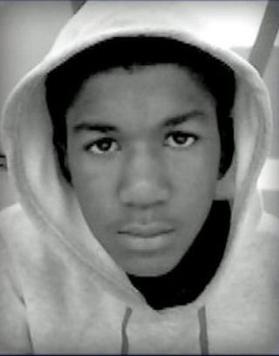
It seems just a little bit weird when a 30 year old man follows a 17 year old boy down a street at night. Especially weird, when the boy looks as innocent as the picture shows. A 30 year old man must be very worked up to think that an innocent boy is at all a threat.
Logic was considered a lot in the shooting death of Trayvon Martin because unlike the case of Emmett Till, people who kill nowadays do get some level of dissection in their trials. Since only one person can speak about what happened that night, the logic George Zimmerman uses to defend his killing of Trayvon, has to be examined. That is where the photo comes in. Trayvon Martin is wearing a hoodie in the picture. Although the hoodie is not the same one he wore on the day of his death, it is what the man with the gun was afraid of. By looking at the photograph people can see how visually un-intimidating Trayvon Martin looks. Most news outlets and people who reference Trayvon Martin use this picture because it shows a young innocent kid. There is nothing offensive or unsettling about an image of a boy in a white hood. Despite any preconceived notions someone might have about Trayvon, whether they want to call him a thug or a bully, it all pails in comparison to the fact that before his death, Trayvon Martin was just an innocent kid in a sweatshirt. This opposes any logic of fear George Zimmerman claims prompted his pulling of the trigger. The supposed power struggle is void when someone sees the picture after Trayvon has died, his legs crossed, and his eyes rolled back. A gun versus a 17 year old boy has only one outcome, and it is the one sadly displayed in the photo. If there needs to be a reason not to shoot random black boys on the street, it is because they have done nothing wrong. They are the unfortunate victim to a dangerous stereotype that exists about the motives of all black men. Trayvon Martin was not a bad person. He was just as innocent when the picture was taken as he was when the trigger was pulled. Therefore, Zimmerman's defense is a shock to anyone who sees what these photos have to say.

-Lindsey Wright
Pathos: One Image, One Child, One Innocent Flame Extinguished
If I asked you about what your mind conjures up
when I say the word "Innocence"? I would wager something along the
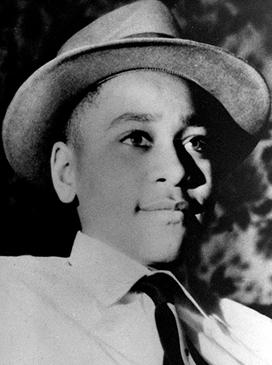
lines of this image first comes to mind. But this should not make a difference in the
outcome of your life, and whether or not you get to live past the age of
fourteen. Unfortunately, being born an African-American in the era of Jim Crow
laws led to Emmett Till becoming just one more story without an ending due to
the pervasiveness of racial injustice in 1950's America. This photo of Emmett Till at his
funeral should not be examined impartially. I believe, that it
simply cannot. This picture appeals to the very essence of what it means to be
human. The innocence of children is considered to be sacred in our society. The
mutilation of a shockingly young boy portrayed so vividly in this image became
a call to action to implement new laws, which would protect the rights of
African-Americans in America. The image of the distorted face of Emmett Till would permeate into the consciousness of Americans through exposure in the media. This picture became a symbol of every black child
who was ever injured, killed or suffered under the racist ideals prevalent in
20th century America.


This picture so deeply affected the American
populace of the 1950's and 1960's that it gave the Civil Rights Movement the
momentum it needed to finally take off. This picture provided undeniable proof
that racism was a parasite eating away at the fibers of mid-century America.
When examining this photograph and remembering the
racism that was prevalent in 1960's American values and the continued
injustices committed against African Americans, I think Macklemore
says it best, "It's human rights for everybody, there is no
difference!"

Monday, September 29, 2014
How Can Trayvon Martin NOT Appeal to Pathos?
We cannot kill children...
unless their wardrobe threatens our safety...
or the color of their skin makes me feel uncomfortable...
or how about if they get a little too close to my happy home?
 Trayvon Martin was a boy. He was a son. He was a child. This popular photo of Trayvon Martin captured years before the unjust taking of his life depicted the innocence found in a life stolen too soon. A Black boy in a hoodie had somehow become a symbol of danger in America. However, the photo of Trayvon was seen as this in the eyes of many. An appeal to humanity found in all people brought upon feelings ranging from rage, for the fact that Black life seems to be disposable within our culture, to despair, in grieving for a life that had ended before it had a chance to start. To stare into the eyes of a child, regardless of his or her ethnicity invokes some type of emotion in all people. The sole image of a lone boy forces the viewer to acknowledge that this was a person and now he is gone. He no longer exists because his life was stolen. He no longer opens the eyes that you are looking into over a computer screen. He is now buried six feet under because of a deeply rooted prejudice that continues to grow within the soil of America. He is not the convoluted image of a thug that the media has created. He has a name, family, and home that he can never return to. Trayvon was just a Black boy who's fate had been determined by the color of his skin and let's not forget the threatening hooded jacket. The same prejudice that killed Emmett Till has taken the life of Trayvon and will continue to take the lives of many more Trayvons.
-Ashley McNeill
unless their wardrobe threatens our safety...
or the color of their skin makes me feel uncomfortable...
or how about if they get a little too close to my happy home?
Trayvon Martin was a boy. He was a son. He was a child. This popular photo of Trayvon Martin captured years before the unjust taking of his life depicted the innocence found in a life stolen too soon. A Black boy in a hoodie had somehow become a symbol of danger in America. However, the photo of Trayvon was seen as this in the eyes of many. An appeal to humanity found in all people brought upon feelings ranging from rage, for the fact that Black life seems to be disposable within our culture, to despair, in grieving for a life that had ended before it had a chance to start. To stare into the eyes of a child, regardless of his or her ethnicity invokes some type of emotion in all people. The sole image of a lone boy forces the viewer to acknowledge that this was a person and now he is gone. He no longer exists because his life was stolen. He no longer opens the eyes that you are looking into over a computer screen. He is now buried six feet under because of a deeply rooted prejudice that continues to grow within the soil of America. He is not the convoluted image of a thug that the media has created. He has a name, family, and home that he can never return to. Trayvon was just a Black boy who's fate had been determined by the color of his skin and let's not forget the threatening hooded jacket. The same prejudice that killed Emmett Till has taken the life of Trayvon and will continue to take the lives of many more Trayvons.


-Ashley McNeill
Trayvon Martin's Image: An Unfortunate Appeal to Kairos
Following the shooting death of Trayvon Martin, photos of him as a child were released. These photos hearken back to the death of Emmett Till in that they both show smiling happy young boys. The kairos employed by releasing photos of Trayvon Martin wearing a hooded sweatshirt were meant to oppose the claims of the accuser George Zimmerman, that Trayvon Martin had challenged him in a physical altercation. This photo was heavily circulated as news outlets replayed Zimmerman's 911 call. The prevalence of the analyzed photo in the media as opposed to photos like this or this, made Trayvon Martin's innocence valid. The photo was also able to spark discussions about racial tensions in America. The photo of Martin, sprawled on his back on the floor was accidentally released during the trial. This photo was shown on news outlets like MSNBC and it further tugged at the heart strings of those who felt that Trayvon Martin was innocent. This "death photo" came out in the midst of the George Zimmerman trial and so it was able to polarize many peoples opinions on the events that led up to the murder. The photos were not released at the same time. Though the second photo was accidental, it aided in making the point that Trayvon Martin was another victim to racism. His lifeless body compared to his young and alive body provide stark contrasts to the late Trayvon Martin. Had the photos been released today, instead of in the midst of the murder investigation, they would certainly have stirred less controversy. There have already been other young black men killed due to racism so the photos might not seen as, individually powerful as their are now. The latest victim, Michael Brown might still have taken the spotlight on the topic of racial discrimination.
-Lindsey Wright
-Lindsey Wright
The Perfect Timing of the Most Heart Wrenching Photo of All Time
There are not many things more tragic than the death of a child. In 1955 Emmett Till was murdered because he was a black boy flirting with a white woman. Though this injustice can be investigated in further detail, presently I will be analyzing the timing, or kairos, of the images released following Emmett Tills death. Till's funeral photo was released by "Jet", an African American magazine. This emotional photo was taken after Till's mother insisted that her son be given an open casket burial. The intensity of the beating perpetrated by two white men intensified the ongoing conversation of racism in America. In one photograph Emmett Till is beaten beyond recognition. His entire face is swollen and incredibly misshapen. Because people across the country could see the violent effect racism was having for kids as young as fourteen, the civil rights movement had a new driving force. The picture of Emmett Till before his beating utilizes good timing in that it shows the innocent child alive just months before racism robbed him of his innocence. Seeing Till's mutilated face rallied people, both blacks and whites, to march in protest against racial discrimination. Had Mamie Till decided to have a closed casket funeral, and had she decided to keep her sons face out of the media, many people would never had been affected by the horror that was Emmett Till's murder. The photo, taken on the most heart wrenching day of Mamie Till's life, was a catalyst for change in a country of people fed up with being treated as second class citizens. The horror of the description of Emmett Till's murder were swiftly matched with the shock of the photos that display just how malicious racism can be.
-Lindsey Wright

-Lindsey Wright
Subscribe to:
Posts (Atom)